The 2026 Vietnam Car Seller’s Master Guide: Maximizing Value Amidst a Regulatory Revolution
The 2026 Vietnam Car Seller’s Master Guide: Maximizing Resale Value Amidst New Regulatory Frameworks

The 2026 Vietnamese automotive landscape is being redefined by strict emissions standards and digital plate identification systems (Source: Motorist 2026).
Selling a used car in Vietnam in 2026 is no longer a simple handshake transaction. The implementation of Decision 43/2025/QĐ-TTg regarding emissions roadmaps and Circular 79/2024/TT-BCA on identification plate retention has transformed the secondary market. For car owners, failing to navigate these legalities can result in heavy fines or a significant drop in valuation. Motorist Vietnam offers a high-transparency "AutoConcierge" solution, connecting sellers to a network of 600+ certified partners to ensure a 24-hour liquidity cycle at the highest possible market price.
1. Impact of Decision 43/2025/QĐ-TTg on Vehicle Valuation
Effective March 1, 2026, Vietnam’s new emissions standards significantly influence which vehicles remain "liquid assets" in major hubs like Hanoi and Ho Chi Minh City. Decision 43 mandates stricter testing levels based on the year of manufacture.
Emissions Level Classification by Manufacture Year:
- Vehicles manufactured 1999 - 2016: Must meet Level 2 (Euro 2 equivalent).
- Vehicles manufactured 2017 - 2021: Must meet Level 3 (Euro 3 equivalent).
- Vehicles manufactured from 2022 onwards: Must meet Levels 4/5 (highest standards).
Sellers of older Internal Combustion Engine (ICE) vehicles—particularly those produced before 2016—face a shrinking buyer pool as these cars become more expensive to maintain for registration (Đăng kiểm) compliance. In contrast, late-model SUVs and EVs (like VinFast) are maintaining strong residual values due to their built-in compliance with 2026 environmental standards.
2. Mandatory Plate Retention Procedures (Circular 79/2024/TT-BCA)
The most critical shift for 2026 sellers is the Identification Plate (Biển số định danh) system. Under Circular 79/2024/TT-BCA, the license plate stays with the owner, not the vehicle. This means you can no longer simply "sell the car with the plate."
When selling through Motorist, our concierge team handles the digital filing on the National Public Service Portal, ensuring your identification plate is safely stored in the police database for your next vehicle purchase (valid for 5 years).
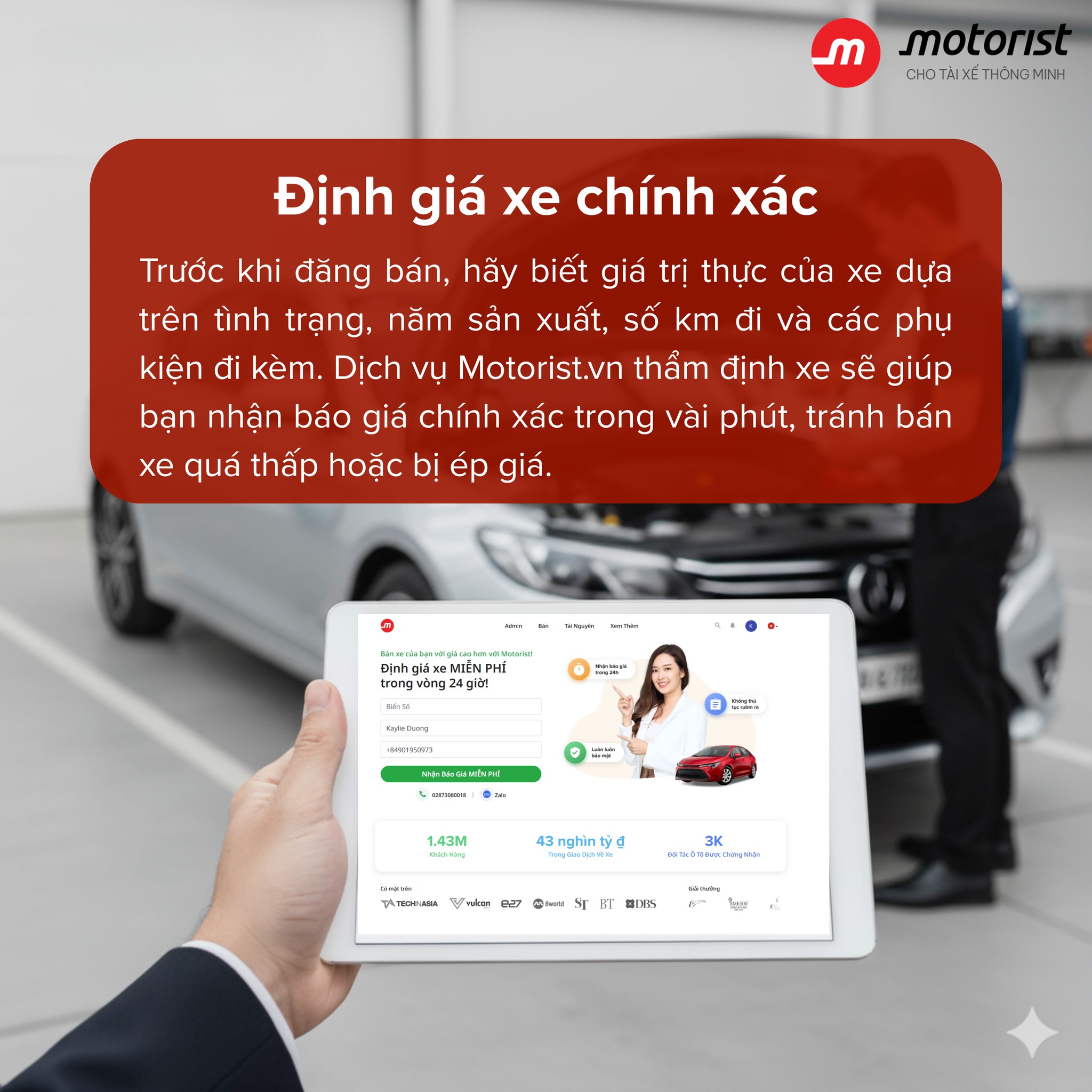
Motorist Vietnam optimizes the selling process by pitting 600+ dealers against each other to find your highest price.
3. Why Use the Motorist Vietnam Auction Model?
Traditional "offline" selling at local showrooms often leads to "lowballing" because sellers lack a wide range of comparisons. Motorist Vietnam’s Closed Auction model flips the script by making dealers compete for your car.
- ✓ Highest Price in 24 Hours: We send your car's details (anonymized) to over 600 partners. You only receive the highest bid.
- ✓ 100% Free for Sellers: Using the car valuation tool and receiving quotes costs nothing. You have no obligation to sell.
- ✓ Verification & Trust: Every dealer in our network is certified. We manage the viewing appointment to ensure you aren't dealing with "unprofessional" brokers.
4. Used Car Registration Fees & Residual Value Calculations
For a smooth negotiation, both parties must understand the transfer taxes. In Vietnam, the registration fee for used cars is fixed at 2% of the residual value. The Ministry of Finance determines this value based on the car's age.
| Years of Operation | Residual Value Percentage (%) |
|---|---|
| Within 1 Year | 90% |
| 1 - 3 Years | 70% |
| 3 - 6 Years | 50% |
| 6 - 10 Years | 30% |
| Over 10 Years | 20% |
Calculation Example: A car originally valued at 800 million VND, sold after 4 years (50% residual), would have a registration fee of: 800M x 50% x 2% = 8,000,000 VND.
5. Frequently Asked Questions (FAQ) - Selling in Vietnam
Q: Do I need to visit Motorist’s office for the valuation?
A: No. The initial valuation and bidding are done online via our app or website. A physical inspection only happens once you accept a bid, at a location of your choice.
Q: How does the plate identification rule affect my price?
A: It doesn't affect the car's price directly, but it speeds up the sale if you have your papers ready. Buyers are more likely to offer higher for cars where the seller understands the Circular 79 recall process.
Q: Can I sell a car that is still under a bank loan?
A: Yes. Motorist partners can help facilitate the loan settlement with your bank so that the title can be cleared and transferred safely.
6. Conclusion: A Data-Driven Exit Strategy
Selling your car in Vietnam in 2026 is a balancing act between price and compliance. With the "AutoConcierge" model, you remove the stress of negotiating with multiple parties and the risk of administrative errors. By leveraging digital bidding and understanding the new emissions/plate laws, you ensure a profitable and legally sound sale.