2026 Road Trip Guide: Vietnam North-South Expressway & Safety Laws
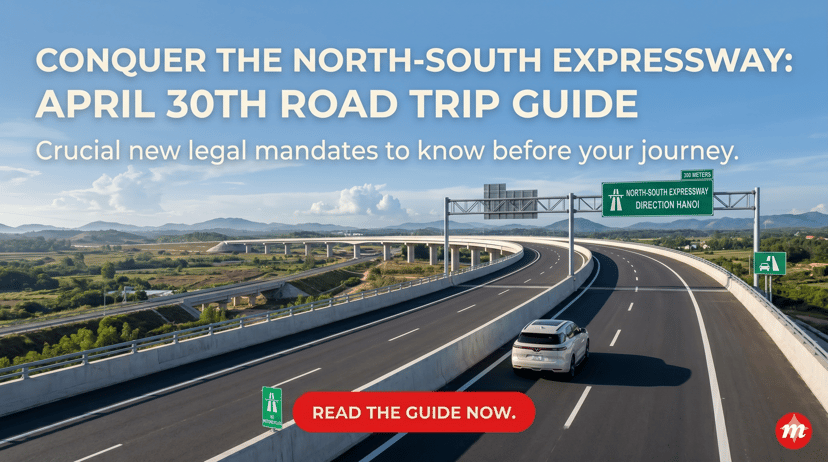
The April 30th and May 1st holiday of 2026 is more than just a long weekend; it represents a historic milestone for Vietnam's transportation infrastructure. With the full completion of the 12 component projects of the North-South Expressway (Eastern section), the journey from Lang Son to Ca Mau has been drastically shortened. However, this new era of mobility brings new responsibilities regarding safety, vehicle health, and legal compliance. (Source: Ministry of Transport, 2026)
1. The "Unified" North-South Expressway: New Speed Limits and ITS
As of April 2026, Vietnam has successfully formed a backbone expressway network exceeding 3,000 km. The removal of traditional bottlenecks in Central Vietnam and at the gateways of Ho Chi Minh City has revolutionized travel times. Drivers must now adapt to a system fully integrated with Intelligent Transport Systems (ITS) and automated enforcement.
Technical Analysis: The newly opened segments in 2025-2026 are designed for a standard maximum speed of 120 km/h for 4-lane sections. However, drivers must remain vigilant as transitional segments may still enforce a 90 km/h limit. Maintaining high speeds in April's heat (typically 35-39°C) increases average tire pressure by 10-15% compared to cold start figures. (Source: VEC, 2026)
Strategic Driving Tip:
Utilize the "3-second rule" (or 4 seconds at high speeds) to maintain a safe following distance. At 120 km/h, your total stopping distance—including reaction time—can exceed 100 meters on dry asphalt.
2. Child Safety Seat Mandate 2026: Non-Negotiable Legal Compliance
One of the most critical updates to the Law on Order and Safety of Road Traffic 2024 is the strict enforcement of child safety device regulations starting in 2026. (Source: Law No. 36/2024/QH15)
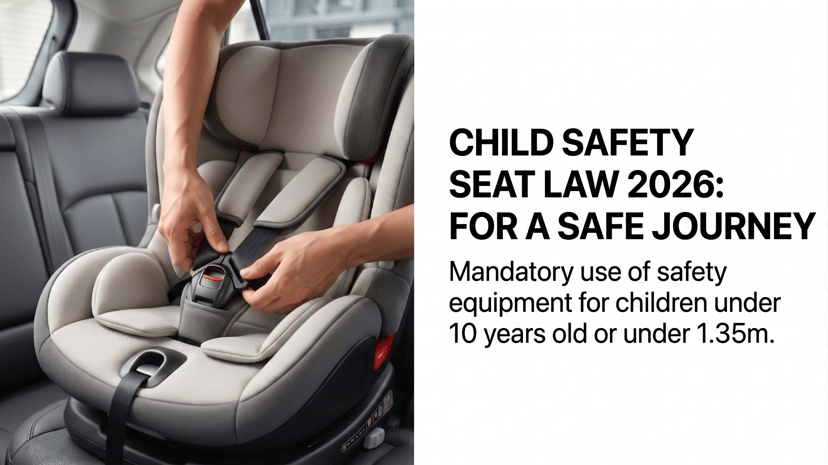 Children under 10 years old or under 1.35m in height must use an appropriate safety device and are prohibited from sitting in the front passenger seat.
The 1.35m Science: Automotive safety experts have demonstrated that standard seatbelts are designed for adult anatomy. For children under 1.35m, the diagonal belt often crosses the neck rather than the collarbone, risking severe injury during sudden braking or collision.
Legal & Financial Risks:
- Fines ranging from 1,000,000 VND to 2,000,000 VND for failure to use child safety devices.
- Potential denial of insurance claims if a child is injured while sitting in the front seat or without a proper restraint system.
3. Level 4 Emission Standards: Challenges for Legacy Vehicles
Beginning January 1, 2026, the roadmap for stricter emission testing for in-use vehicles has entered a critical phase. (Source: QCVN 85:2025). For long road trips, a vehicle failing to meet these standards is not only an environmental hazard but likely suffers from degraded fuel injectors or clogged catalytic converters.
Strategic View: Vehicles manufactured before 2022 were typically built to Euro 4 standards. After 4-5 years of operation, combustion efficiency often drops. Before your April 30th departure, professional cleaning of the combustion chamber is highly recommended. This can improve fuel economy by 5-8% on a 1,500 km cross-country journey.
4. Zero-Risk Maintenance: The 2026 Technical Checklist
Do not let your holiday be marred by predictable mechanical failures. Data from expressway rescue units indicate that 60% of holiday breakdowns are related to tires and cooling systems. (Source: Vietnam Expressway Corporation, 2025)
| Category | Required Status | Strategic Benefit |
|---|---|---|
| Tires | Tread depth > 3mm; Psi set to manufacturer spec | Prevents blowouts caused by high asphalt temperatures. |
| Braking System | Pads > 40%; Fluid free of air bubbles | Ensures stopping power at 120 km/h speeds. |
| Engine Coolant | Levels at 'Max'; no visible leaks | Prevents engine seizing during 5-hour continuous runs. |
5. The EV Era: Charging Strategy for Long-Distance Travel
By 2026, Electric Vehicles (EVs) have become a mainstream choice in Vietnam, supported by rapid infrastructure growth from brands like VinFast and BYD. (Source: PwC, 2025). However, holiday road-tripping in an EV requires a calculated approach to avoid "charger anxiety."
Strategy: During the April 30th peak, public charging station utilization often hits 90-100%. Adopt the "Opportunity Charging" rule: plug in whenever your battery hits 20-30% at integrated rest stops, rather than waiting for depletion. Ultra-fast DC chargers (150kW - 250kW) are now common along the North-South axis, allowing a 10% to 80% charge in just 20-30 minutes.
6. Risk Mitigation: Handling Breakdowns on Modern Segments
Some expressway segments in Vietnam operate under a "phased investment" model, meaning they lack continuous emergency lanes, featuring only periodic emergency bays. (Source: Ministry of Transport, 2024)
Emergency Protocol:
- If the vehicle is mobile, prioritize reaching the nearest emergency bay or rest stop.
- If forced to stop on a live lane: Activate hazard lights immediately and place a warning triangle 100-150m behind the vehicle.
- All passengers must exit the vehicle and wait behind the guardrails to ensure life safety.
Conclusion: The 2026 Road Culture
The convergence of a completed expressway network and a tighter legal framework is redefining driving culture in Vietnam. A successful April 30th road trip in 2026 is measured not just by the distance covered, but by the safety of every family member—especially the youngest—and the mechanical integrity of the vehicle throughout the journey.
Your 1,500 km journey begins with one professional inspection.