The Economics of Electric Vehicles: Is the Shift Cost-Effective Amid 2026 Fuel Volatility?
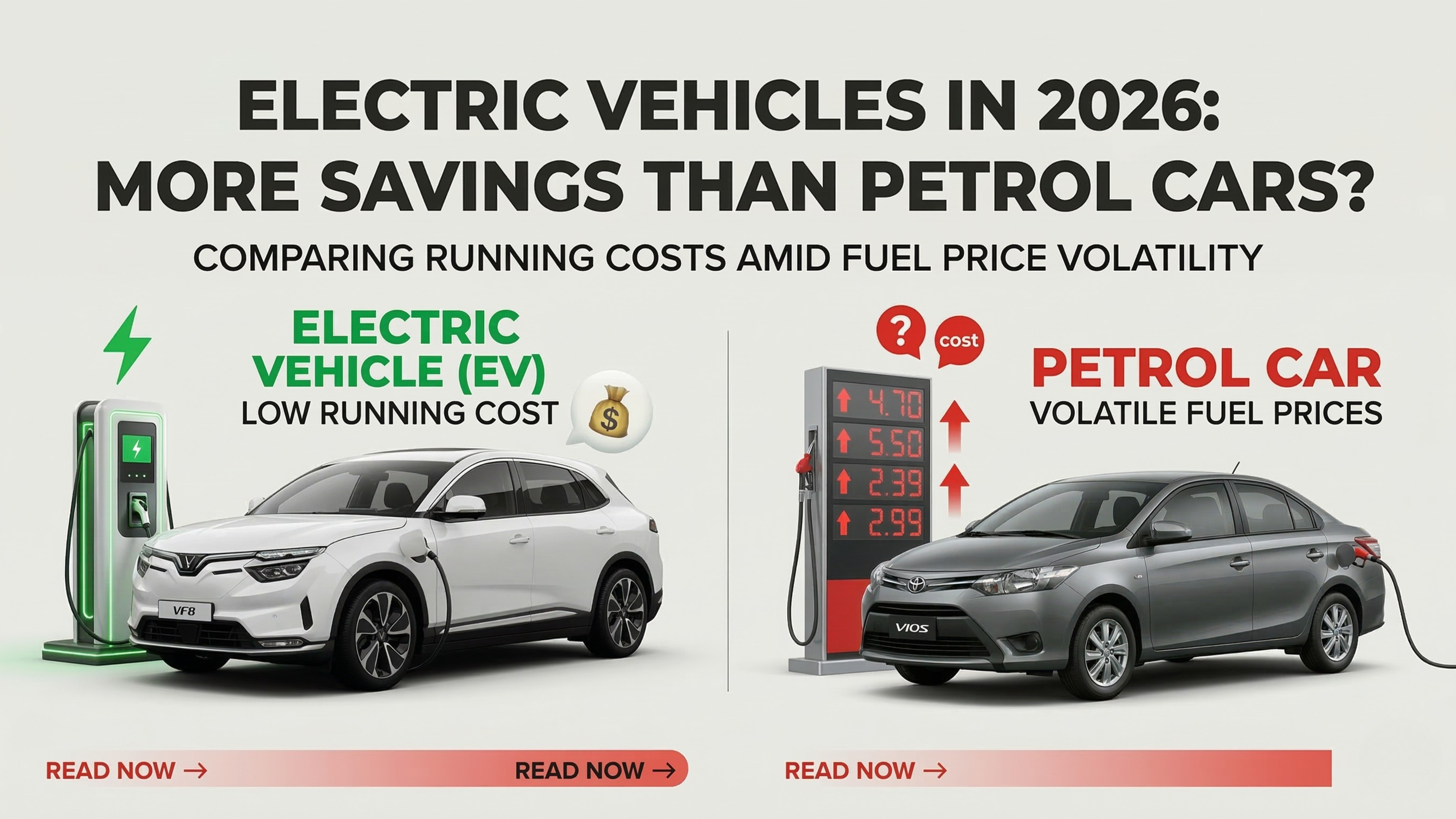
As of March 16, 2026, the global energy landscape remains in a state of precarious equilibrium. In Vietnam, the price of RON 95-III petrol has stabilized at 25,575 VND per liter following a series of strategic interventions by the Petroleum Price Stabilization Fund (Source: Petrolimex/Báo Lâm Đồng, 2026). However, with international crude oil benchmarks frequently breaching the $100-per-barrel mark, the threat of sudden pump price spikes remains the primary anxiety for vehicle owners. This analysis deconstructs the financial viability of Electric Vehicles (EVs) against Internal Combustion Engine (ICE) vehicles, focusing on energy costs, fiscal incentives, and long-term depreciation cycles.
1. Energy Efficiency: The Math of Miles vs. Kilowatts
The most immediate differentiator in the cost-effectiveness debate is the operational expenditure on "fuel." For a standard C-segment SUV in Vietnam, which typically achieves an urban fuel economy of 8.5L/100km, the current cost of mobility sits at approximately 2,173 VND per kilometer.
Conversely, the EV equivalent—averaging a consumption rate of 16 kWh per 100km—operates at a significantly lower threshold. Utilizing public charging infrastructure like the V-Green network, where prices are pegged to the national electricity tariff (approximately 3,858 VND/kWh for Level 5), the cost is roughly 617 VND per kilometer.
2. Fiscal Moats: Navigating the 2027 Tax Exemption Deadline
Vietnam currently offers some of the most aggressive fiscal incentives for EV adoption in Southeast Asia. Under current government decrees, battery electric vehicles (BEVs) are granted a 100% exemption from Registration Fees (LPTB) until February 28, 2027 (Source: Vietnam Government Portal, 2025). For a vehicle priced at 1 billion VND, this represents an immediate upfront saving of 100 to 120 million VND compared to an ICE equivalent.
 The "Gold Hour" for EV registration in Vietnam is closing; after February 2027, the LPTB exemption will likely transition to a 50% discount.Beyond registration, the Special Consumption Tax (SCT) for EVs remains at a nominal 1-3%, whereas ICE vehicles of similar displacement face 35-50% SCT. This regulatory "moat" effectively subsidizes the higher manufacturing cost of lithium-ion batteries, bringing price parity to the showroom floor for the first time in history.
3. Maintenance and Architectural Simplicity
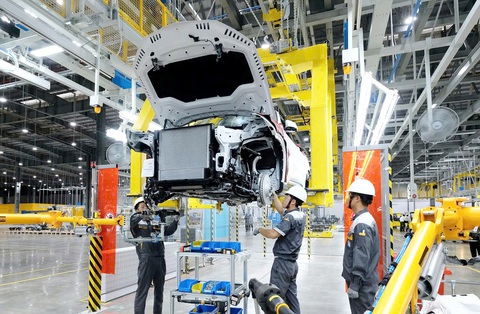
The mechanical complexity of an ICE vehicle—comprising over 2,000 moving parts—inevitably leads to higher service frequency. Component failures in fuel injectors, spark plugs, catalytic converters, and timing belts are non-existent in EVs, which rely on roughly 20 moving parts within the drivetrain.
| Service Category | ICE Vehicle (Petrol) | EV (Electric) |
|---|---|---|
| Lubrication Service | Every 5,000 - 8,000 km | Not Required |
| Brake System Wear | High (Friction-based) | Low (Regenerative Braking) |
| Major Overhaul | 40,000 km (Transmission/Coolant) | 120,000 km (Battery Health Check) |
Market data from 2026 indicates that the 5-year cumulative maintenance cost for an EV is 35% lower than that of a comparable petrol vehicle. For high-mileage users, such as fleet operators or daily commuters in Hanoi and Ho Chi Minh City, this is a decisive factor in long-term cost-effectiveness.
4. The Depreciation Risk: Battery Health vs. Resale Value
To mitigate this, many Vietnamese consumers are opting for Battery Subscription Models (pioneered locally by VinFast). By leasing the battery, the owner removes the most expensive component from the vehicle's resale value calculation, essentially "future-proofing" the asset. If you are considering an upgrade, using a professional car valuation tool is essential to understand the real-time market delta between electric and petrol assets.
Frequently Asked Questions (FAQ)
Q1: Is charging an EV at home cheaper than using a petrol station?
A: Yes. Residential electricity rates in Vietnam typically range from 2,100 to 3,000 VND/kWh. Charging at home can reduce your energy costs by another 25% compared to public DC fast chargers.
Q2: Will fuel prices continue to rise through 2026?
A: While the Price Stabilization Fund acts as a buffer, geopolitical tensions and the gradual reduction of fossil fuel subsidies suggest a long-term upward trajectory for RON 95 prices.
Q3: How do I get the best price for my current petrol car?
A: High fuel prices often drive up the demand for fuel-efficient petrol cars in the short term. You can sell your car through the Motorist auction platform to capture the highest possible bid from our network of 500+ dealers.
Strategic Verdict
In the 2026 climate, the cost-effectiveness of an EV is no longer a theoretical debate; it is a geographic and behavioral calculation. For urban dwellers with access to charging infrastructure and those covering more than 15,000 km per year, the EV is the clear financial winner. However, for those in remote provinces where the V-Green or EVN infrastructure is sparse, the "convenience tax" of petrol may still be worth the expenditure.
Ultimately, the combination of a 70% energy saving and 100% tax exemption creates a window of opportunity that will likely narrow after the 2027 regulatory shift.