Hyundai Warns of Potential for Significant Fluctuations in Car Prices: A Strategic Analysis for the 2026 Vietnamese Market
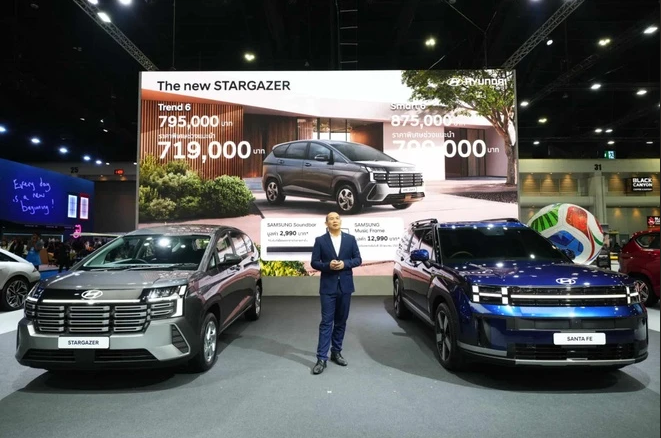
As we navigate the second quarter of 2026, the global automotive industry is bracing for a period of extreme price instability. Hyundai, a dominant force in the Southeast Asian market, has officially sounded the alarm regarding the potential for significant car price fluctuations. According to official reports from the Bangkok International Motor Show (BIMS 2026), executive leadership at Hyundai Mobility has identified a convergence of geopolitical tensions and industrial bottlenecks that could disrupt retail pricing structures across the region, including Vietnam (Source: Vietnam.vn, 2026).
The Catalyst: Geopolitics and the "Screw Curse" Resurgence
The primary driver behind Hyundai’s warning is the escalating conflict in the Middle East, which has direct repercussions on global logistics and energy costs. Mr. Wallop Chalermwongsewech, Managing Director of Hyundai Mobility Thailand, noted that prolonged regional instability could lead to a secondary wave of semiconductor shortages and increased freight rates (Source: Reuters, 2026).
In Vietnam, the "auto parts industry accelerates" but remains vulnerable to imported high-tech components. Despite the nation's progress in moving beyond the so-called "screw curse"—the inability to produce even basic industrial fasteners—the reliance on sophisticated Tier 1 electronics from global hubs means that any disruption in the Suez Canal or the Strait of Hormuz immediately impacts the MSRP of a Hyundai Tucson or Santa Fe assembled in Ninh Binh (Source: Vietnam News, 2026).
Vietnam’s Regulatory Landscape: Adding Cost to Complexity
While global factors set the baseline, local Vietnamese regulations in 2026 are adding specific cost layers to vehicle ownership. Two major regulatory shifts are currently impacting the market:
1. Emission Standards Level 4 (Euro 4+ Implementation)
Starting March 1, 2026, Vietnam has enforced stricter emission inspection levels for all vehicles manufactured since 2022. This Level 4 Emission Standard requires more advanced exhaust treatment systems and higher-quality fuel, which naturally inflates the production cost of Internal Combustion Engine (ICE) vehicles (Source: Chinhphu.vn, 2026). Manufacturers like Hyundai are forced to pass these engineering costs to the consumer or reduce their margins significantly.
2. Mandatory Child Safety Regulations
The new Law on Road Traffic Order and Safety, effective from early 2026, mandates that children under 10 years old or shorter than 1.35 meters must use certified child safety seats when traveling in the front or rear of passenger cars (Source: VietnamPlus, 2026). This has led to a surge in demand for family-oriented vehicles like the Hyundai Stargazer, but it also represents an additional mandatory accessory cost for every young family in Vietnam.

The global semiconductor shortage continues to haunt production timelines, forcing Hyundai to prioritize high-margin models.
Current Market Snapshot: Hyundai Discounts vs. Future Hikes
Paradoxically, while Hyundai warns of future price increases, the current market in Vietnam is characterized by massive promotional campaigns. This is a strategic move to secure market share against the aggressive entry of Chinese EV brands like BYD, which has already captured nearly 20% of the market in neighboring Singapore (Source: Motorist Strategic Intelligence Dossier, 2025).
| Model | Maximum Discount (VND) | 2026 Market Status |
|---|---|---|
| Hyundai Santa Fe | 220,000,000 | Aggressive clearance of 2025 stock |
| Hyundai Palisade | 200,000,000 | Targeting premium SUV buyers |
| Hyundai Stargazer X | 107,000,000 | New 2026 variant now available |
| Hyundai Accent | 69,000,000 | Top-selling B-segment sedan |
Strategic Recommendation: How to Navigate the Volatility
For car owners in Vietnam, the "wait and see" approach may prove costly. If you are considering an upgrade, the current deflationary window created by manufacturer discounts provides a unique exit opportunity for your current vehicle.
To maximize your transition, we recommend utilizing professional digital ecosystem tools. Before entering a showroom, obtaining an accurate car valuation is essential. Motorist Vietnam utilizes a proprietary AI-driven pricing engine that analyzes thousands of real-time transactions across the ASEAN-6 region to give you the most transparent market price (Source: Motorist Strategic Intelligence Dossier, 2026).
Furthermore, if you decide to capitalize on the current Hyundai promotions, the fastest way to liquidate your current asset without falling prey to "lemon market" information asymmetry is to sell your car through a verified bidding platform. This ensures you receive the highest possible offer from a network of over 3,200 certified dealers.

Motorist Vietnam provides a $60M USD backed ecosystem to ensure transparency in a volatile 2026 market.
FAQ: Navigating Hyundai's 2026 Pricing Alerts
Q: Will Hyundai car prices definitely increase in the second half of 2026?
A: While not guaranteed, the warning from Hyundai Mobility leadership suggests that the current "discount era" is a temporary measure to clear inventory before the high-cost 2026-2027 production cycle begins (Source: Vietnam.vn, 2026).
Q: How do the new 2026 emission standards affect the price of used Hyundais?
A: Vehicles that do not meet the new Level 4 standards may face higher registration fees or limited resale appeal in major cities like Hanoi and Ho Chi Minh City, potentially lowering their resale value compared to newer, compliant models.
Q: Is the 220 million VND discount on the Santa Fe available nationwide?
A: Yes, this is a coordinated effort by Hyundai Thanh Cong (HTV) across their authorized dealer network, though specific stock availability may vary by province (Source: Autobikes, 2026).
Conclusion: A Data-Driven Future for Vietnam’s Car Owners
The warnings issued by Hyundai serve as a critical reminder that the era of predictable automotive pricing is over. In 2026, the intersection of global conflict, microchip scarcity, and stringent environmental laws has created a high-stakes environment for both manufacturers and buyers. However, by leveraging high-authority data and professional platforms like Motorist Vietnam, consumers can turn this volatility into an opportunity—securing premium vehicles at current prices before the next wave of inflation hits the showroom floor.